07 / Insurance · Collections and policy transactions
CARDIF / Group policies
Prototyping a complex collections and policy operation.
I took part in online workshops and in shared synthesis and analysis. My main contribution was prototyping the operational solution to turn rules, statuses and policy transactions into navigable workflows.
Outcome: Navigable prototype · no documented launch
- Role
- Product Designer · solution prototyping
- Participation
- Online workshop support · shared synthesis and analysis
- Scope
- Tracking, policy transactions, files, reports and statuses
Complementary case
The challenge
The challenge: A process with several participants
The operation brought together tracking, collections, refunds, reinstatements, discounts, cancellations and reports. The challenge was to connect search, policy selection, files, status changes and confirmations without losing traceability.
My contribution
My contribution: Prototyping the complete operation
I prototyped the solution from the team’s shared process analysis: navigation, search, detail, file upload, status updates and confirmations.
I also supported the online workshops by preparing and building materials, and worked with a colleague on synthesizing and analyzing the team’s findings. Other team members facilitated the workshops.
Value proposition
Value proposition: Traceable policy management
Make policy management traceable by connecting lookup, transactions, files and statuses within one operational workflow.
Decisions and evidence
Decisions and evidence: Policy transactions as navigable, verifiable workflows
The prototype represents not only the ideal screen but the operational sequence and its states.
Tracking
Check the status of a transaction without making changes.
Policy transaction
Collections, refunds, reinstatements, discounts or cancellations.
Files
Explicit upload of operational inputs before continuing.
Status and confirmation
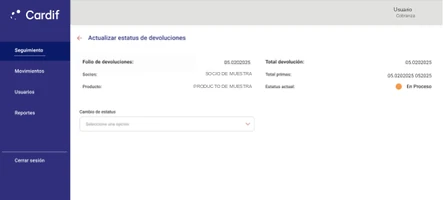
Status change with a case summary and an explicit close.
Reports
Operational reporting from its own section.
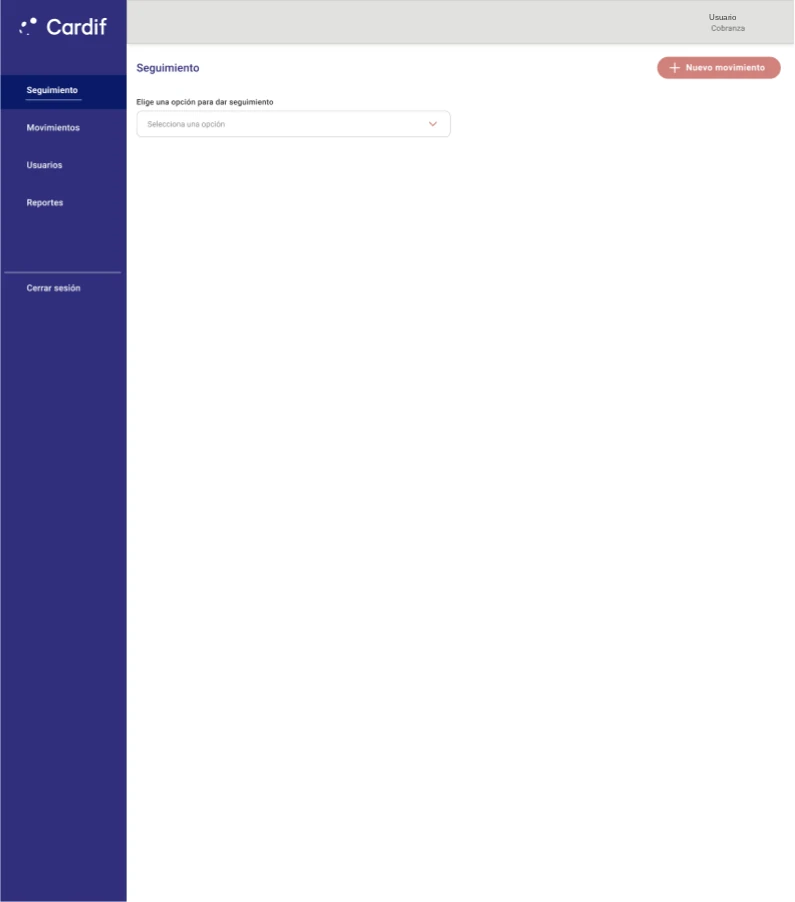
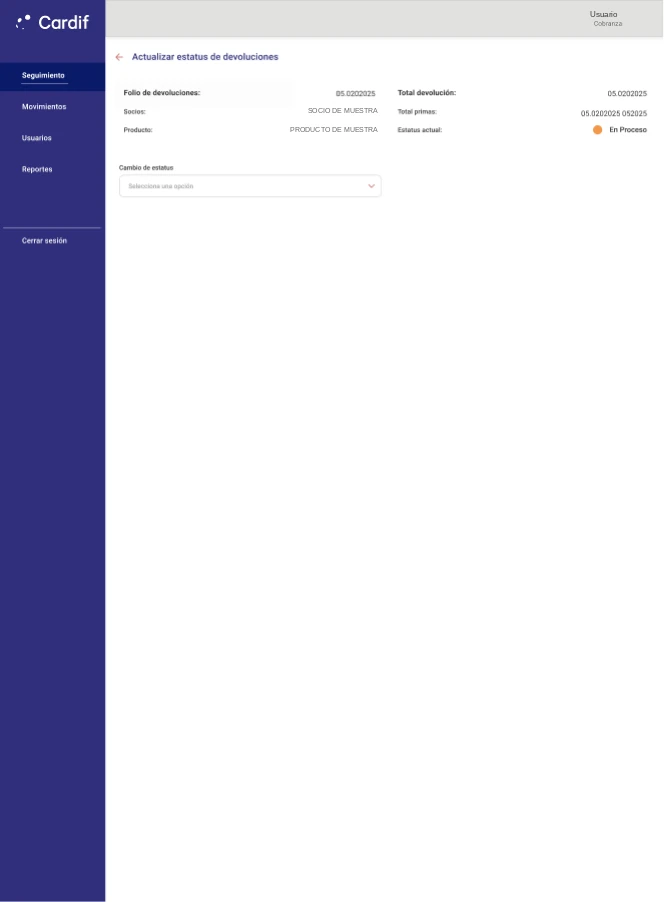
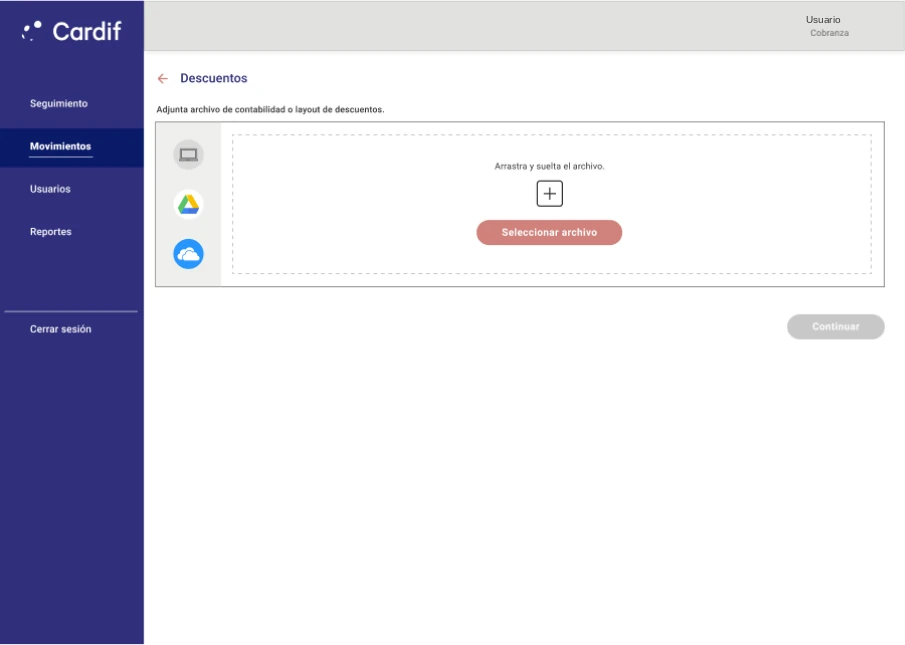
Screens from the original CARDIF prototype (Spanish UI). The user name and partner and product names were replaced with sample data. Reports and confirmations are described in the text; no screenshots of those screens are shown.
01 · Traceability
Keep reference, policy, partner and status visible across the workflow.
02 · Prevention
Hold actions until the required information is available.
03 · Closure
Confirmations and final states to reduce operational ambiguity.
Impact and actual scope
Impact and actual scope: A prototype that made the operation tangible
I prototyped a navigable solution connecting tracking, policy transactions, uploads, reports and status changes. I turned the shared analysis into a concrete basis for discussing rules, dependencies and behavior before development.
Learnings
Learnings: Prototype the system, not just the screen
Prototyping the complete operation revealed dependencies between lookup, files, status changes and reports that isolated screens would not have shown.
What can’t be claimedwithout measurement
What can’t be claimed: A prototype, not a measured operation
- The available evidence documents neither a launch nor usage outcomes.
- No measured operational improvement is claimed.
- Screens show sample data; user and partner names were removed.